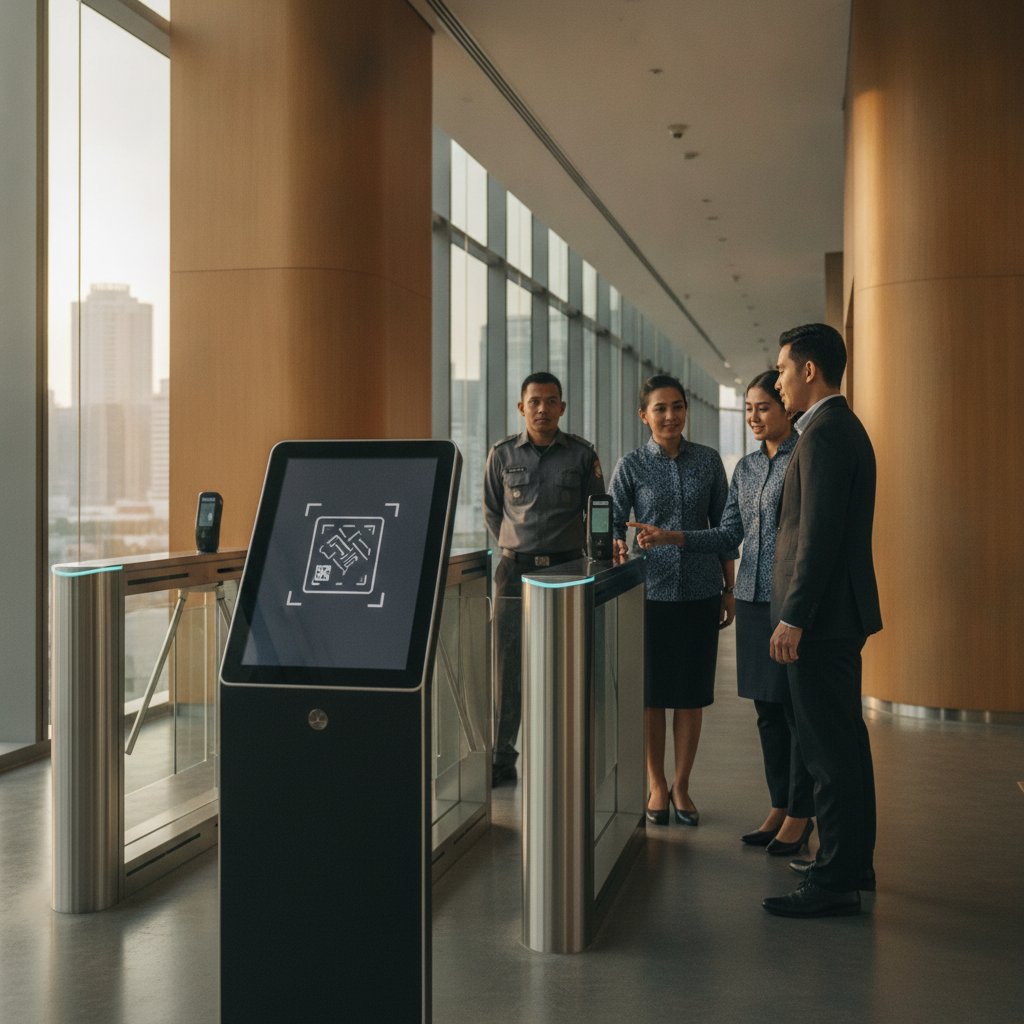
A contractor who was supposed to finish work at 5 PM is found to still have active access to the server room the following morning. In the field, this is often dismissed as a minor administrative oversight, yet it represents a critical physical security vulnerability. A robust visitor management system is a digital solution that automates identity validation, access duration, and the automatic deactivation of credentials to close these frequently overlooked security gaps.
Why 'Perpetual' Badges Are the Greatest Threat During Night Shifts
The primary issue in commercial buildings is not the lack of organized guest registration, but the discipline of revoking access rights. Many buildings still rely on physical access cards that remain 'active' indefinitely for contractors. When a contract expires, cards are often left with vendors or lost without tracking. This creates a vulnerability where entry remains open to parties who should no longer have access to the building.
Security personnel are often caught in the pressure of busy shift handovers. If the morning shift forgets to record a card return, the night shift remains unaware that the card is still active. Reliance on human memory is the weakest link in building security protocols. With an integrated system, every access card has an expiration date tied directly to the agreed-upon contract duration.
How to Balance Workflow Efficiency with Security Protocols?
Many building managers face a dilemma: tighten badge collection procedures—which often causes lobby queues—or allow rapid contractor workflows at the risk of security? A fatal error is assuming that a digital logbook is sufficient to secure an area. In reality, a logbook only records entry times; it does not ensure that physical access is systematically revoked the moment a contractor leaves the lobby.
You can see how an integrated system works automatically through a visitor management system designed to minimize human intervention in the access blocking process. With this system, lobby workflows remain smooth because verification is digital, while the security of sensitive areas is maintained because the system automatically terminates access the moment the permit expires. This is the balance between efficient operations and maximum building asset protection.
What Concrete Steps Can Close Access Gaps with Centralized Automation?
To stop the risk of uncollected badges, you must shift from a trust-based system to a policy-based access system. The first step is to integrate contractor work permit durations directly with the door control system. If the contract duration expires, the system must automatically deactivate the credentials without waiting for manual instructions from security staff on the ground.
Implementing this technology allows building management to gain full visibility into who is inside the building at any given time. With a centralized dashboard, managers can monitor access status in real-time, receive notifications if a badge has not been returned, and ensure every contractor movement is accurately recorded. Do not let your building's security be compromised by recurring administrative negligence. If you would like to discuss how this system can be tailored to your building's needs, please contact our team for a technical discussion or visit https://simplo.id/ for more information on smarter security system integration. We are ready to help you design a more secure workflow through a system demo that can be customized to your operational requirements.