When auditors request evidence for an incident at a second-floor access point, security teams are usually trapped in an exhausting ritual: downloading access logs from the control server, manually searching for CCTV clips, and tracking door repair statuses in a technician's logbook. A physical security system integration platform is a data orchestration solution that unifies access metadata, camera visuals, and maintenance status into a single, cohesive workflow. Without this system, every incident remains a puzzle that must be pieced together from fragmented information.
Why Three Different Teams for One Incident Is a Recipe for Failure
The most common mistake in the field is allowing security teams, technical teams, and audit teams to work in separate silos. When an anomaly occurs, such as a forced door, the security team only sees the access log, while the technical team only realizes there is a sensor malfunction after receiving a complaint. This misalignment creates a wide audit gap. You cannot validate an incident if the visual evidence from CCTV is not synchronized with the door access timestamp and the relevant work order status.
Often, operators must manually synchronize data between systems just to prove that a door was indeed broken and not left open due to staff negligence. This process is not only slow but also prone to data manipulation or human error when matching event times. This is where the physical security system integration platform becomes crucial; it acts as a single source of truth that automatically binds these three elements into an intuitive interface.
Measuring Efficiency: Between Data Completeness and Operator Workload
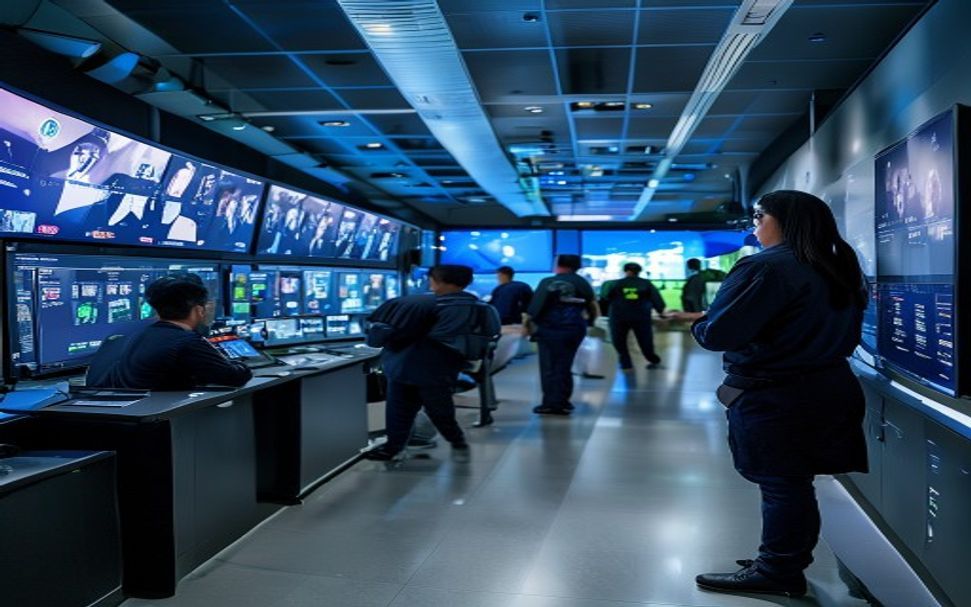
Many facility managers fall into the trap of thinking that the more systems installed, the safer their building. In reality, the opposite is true: the operator's cognitive load increases drastically. If every system has its own dashboard, operators will suffer from 'alert fatigue.' A fatal error occurs when operators ignore security system alerts because they are too busy monitoring non-integrated CCTV screens.
The honest limit of fragmented systems is the inability to perform real-time cross-correlation. You might have the most advanced cameras, but if they do not know that the door below is in 'maintenance' or 'force open' status, the resulting footage is just a pile of silent data. Proper integration is not just about displaying all feeds on one screen, but providing operational context for every incoming data point. By simplifying data input, operators can focus on strategic decision-making rather than merely moving data between applications.
How to Turn Audits from a Burden into a One-Click Report?
The concrete step to ending this chaos is to adopt an ecosystem capable of pulling data across modules. Through solutions at https://simplo.id, every suspicious access will automatically trigger the related CCTV clip and, if necessary, open a work order for the technical team to perform a physical inspection. This is no longer about searching for data, but about presenting verified facts in a single export report ready for management review.
Imagine the efficiency created when auditors no longer have to wait for the security team to gather evidence for days. With an integrated system, all access logs, video recordings, and repair statuses are bound by an accurate timestamp. This is a proactive way to manage building security, where every device works as a unified whole, not as a confusing, independent entity. If you are ready to optimize your building security workflow, please contact us to discuss your system integration needs.